

When not being yourself helps
f*ck authenticity, lessons from the stage, performance and persona

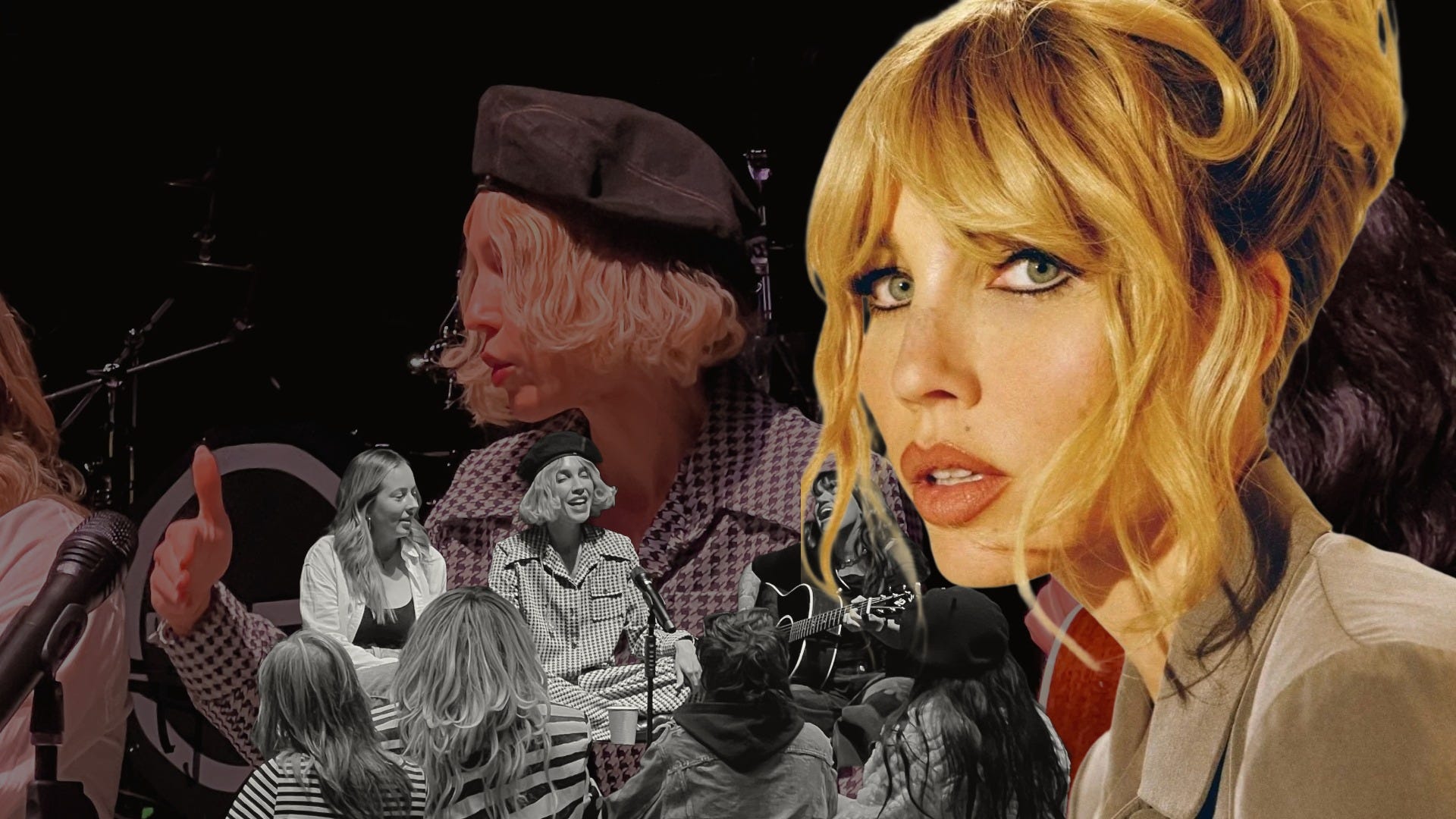
This week I went to see Goldie—one of the shows I’ve been deliberately booking, month after month, since moving back to a city where things like this are easy again. Something small to look forward to. A winter breadcrumb trail of fun.
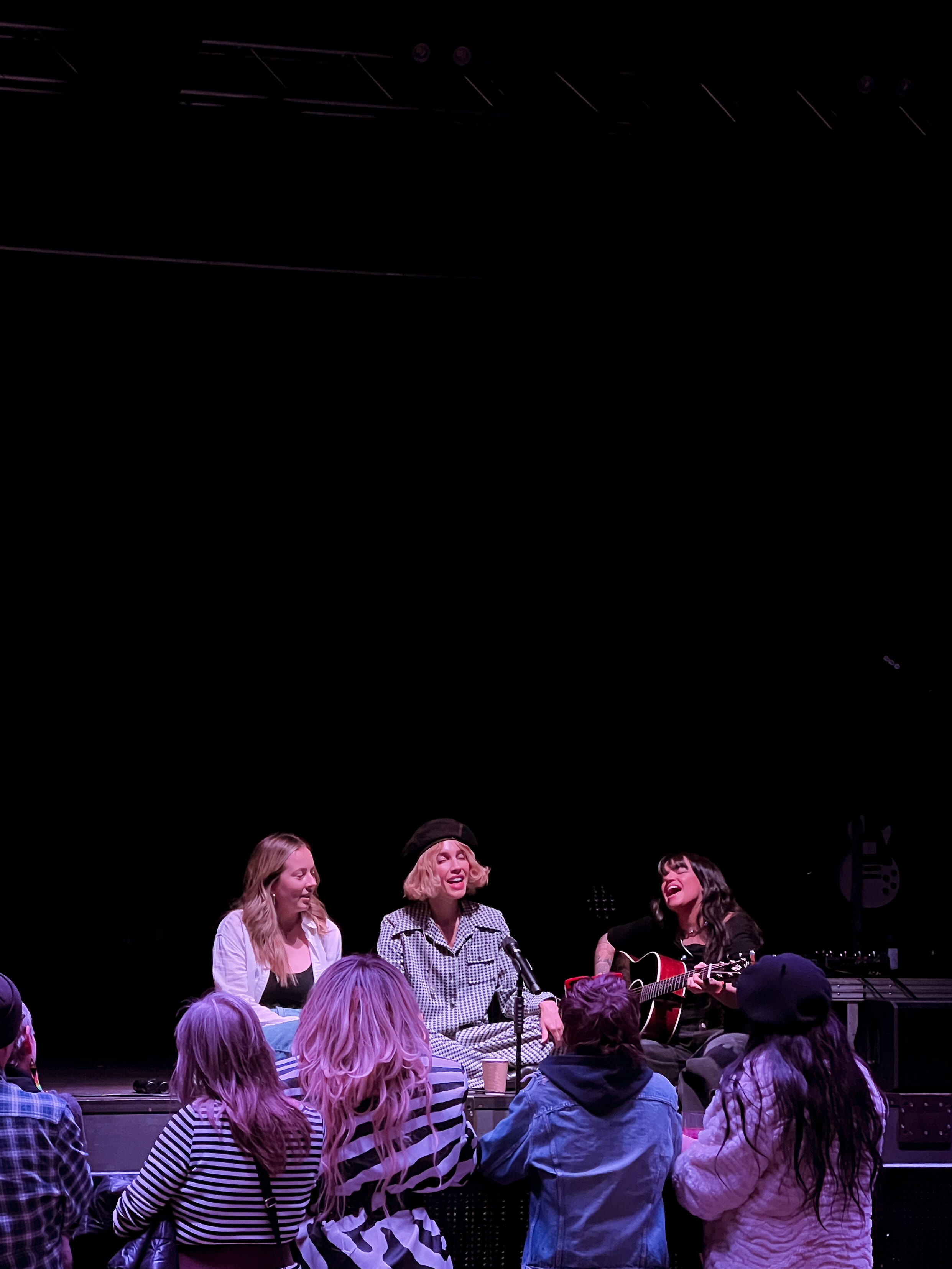
Before the show, there was a VIP Q&A. Someone asked a familiar question: what do you do when you’re creatively stuck?
Goldie answered first. She said she leans in harder—with a caveat. When she’s truly stuck, she doesn’t write for herself. She writes as if she’s writing someone else’s next hit. Her example was Justin Bieber, telling herself, “I’m writing Justin Bieber’s next hit.”
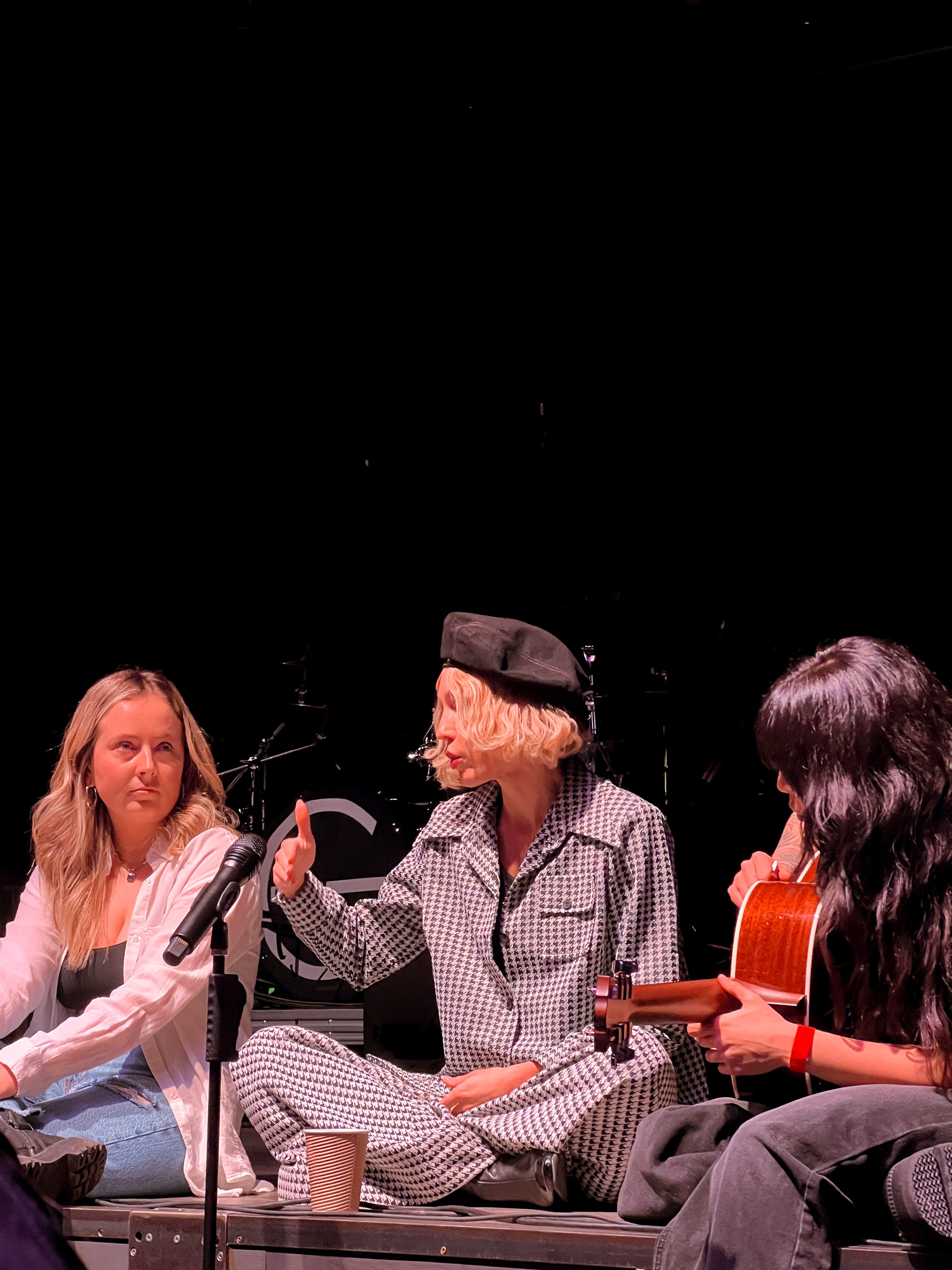
The aim was to shift her thinking. The moment she stops writing as herself, the work becomes a problem to solve rather than a mirror to protect.
Her guitarist answered differently. She steps away. She lives her life. Eventually, something happens—a moment, a feeling, an experience—and the writing follows. Art inspired by life.
I connected with this immediately. Last week I wrote about needing to step away in order to separate the creator from the editor—to create distance from the work. Wrapped into this, too, is the simple fact that life often hands me the material. I don’t spend all week wondering what I’ll write next. I live, and the writing follows. This week was a perfect example: I pulled my phone out mid-show and started jotting down notes so I wouldn’t forget.
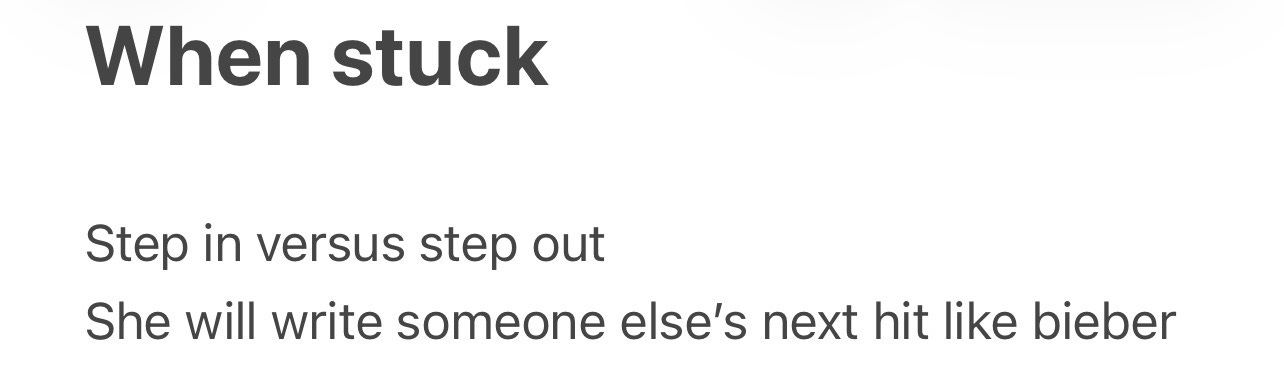
Same problem. Two valid solutions.
But it was the main show that showed me how deeply Goldie uses this creative tool.
On stage, Goldie wasn’t just performing songs. She was inhabiting a character—confident, sultry, playful, fully committed. She danced strangely. She held eye contact. She leaned into the persona so completely that when she occasionally slipped out of it, it made the performance even better—a brief peek behind the curtain.
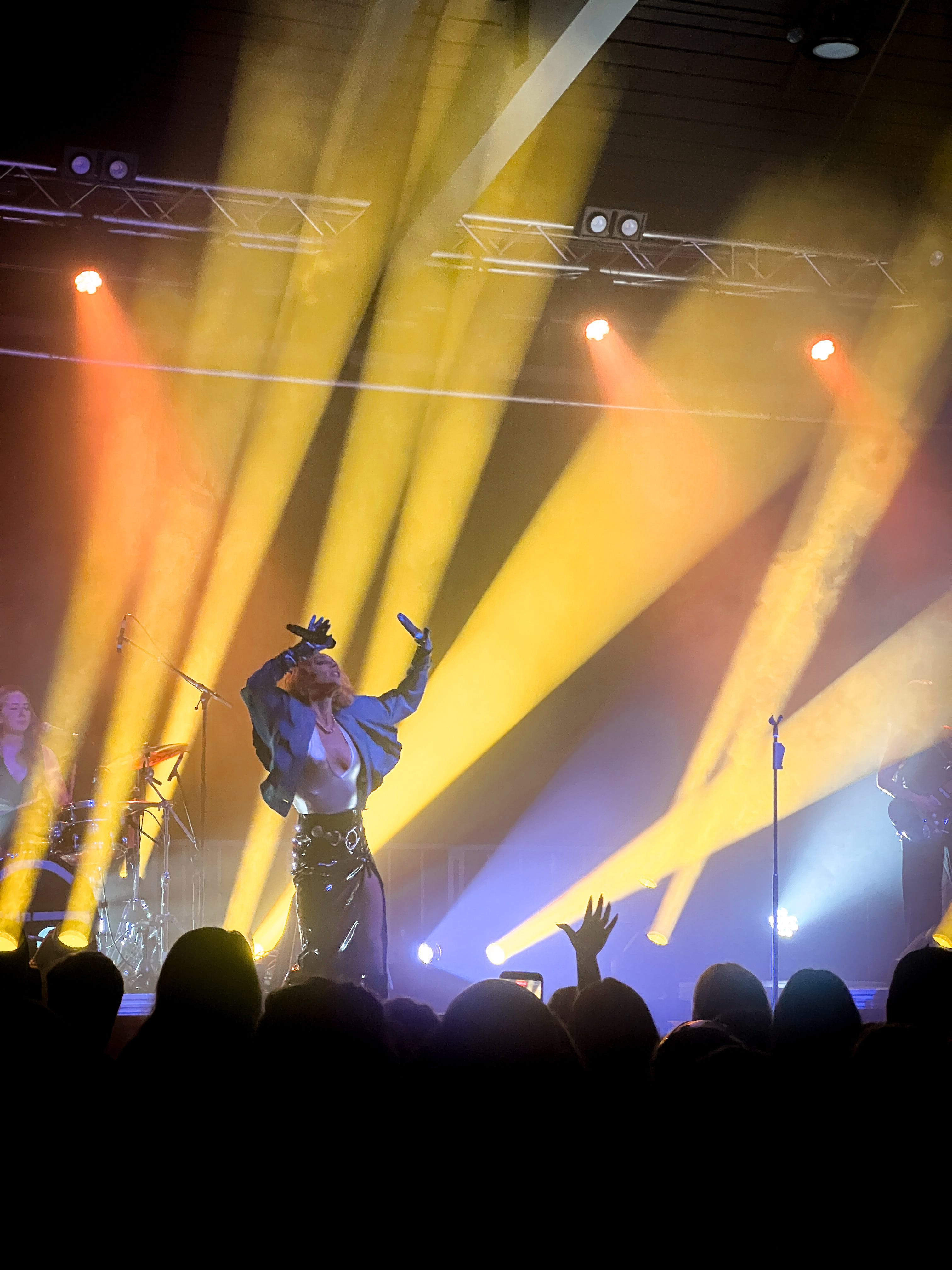
I couldn’t help but analyze the performance through the lens of someone obsessed with the creative process. I may not sing, but I create—and persona isn’t just a writing trick. It’s a way of working, with roots in psychology. A way of bypassing self-consciousness through self-distancing. It becomes easier to exaggerate, or tell the truth, when it isn’t quite you. Just look at the tradition of the jester. They existed to mirror and parody the world—often the only way that kind of truth could be spoken.
Using persona doesn’t mean being loud or theatrical. You can be subtle and still be fully committed. But when someone commits to the “shtick”—whatever that is—it’s compelling to watch.
We’re told constantly to be authentic online—to show up as our real selves, to share honestly, to make the work personal. And while that can be freeing for some, for others it’s the very thing that causes them to freeze. Not everyone wants to reveal themselves to strangers on the internet. Sometimes the pressure to be “yourself” is a hurdle, not a step up. Persona offers a side door: a way to create without everything needing to be about you.
I’ve written about this before, using Beyoncé as an example. This isn’t a new idea. But seeing it play out in real time—first in conversation, then embodied on stage—made it feel practical again, not theoretical. A very entertaining masterclass I didn’t realize I’d signed up for.
It also reminded me of something Stephen King talks about in On Writing. He’s been criticized for the language his characters use. His response is simple: he’s staying true to who they are. A kid wouldn’t tell his mother, “my brother defecated in the bathtub.” He’d say something else entirely: “my brother shit in the bathtub.” The truth of the character matters more than the author’s comfort.
That’s the gift of persona. It helps bypass timidity and fear of judgment. It can lend confidence when our own is lacking—sprinkling in just enough delusion to carry us through a creative crisis.
So this is an invitation to test out a creative persona.
If you’re stuck, blocked, or overly attached, try not being yourself for a moment. Write as if the work belongs to someone else. Paint as if you’re solving a problem for another artist. Step into a voice that isn’t yours and see what comes out.
You don’t have to publish it. You don’t have to monetize it. Let it exist as an exercise. If authors can publish under pseudonyms, you can practice under a persona.
Personal Work
Nimpkish & Kokish
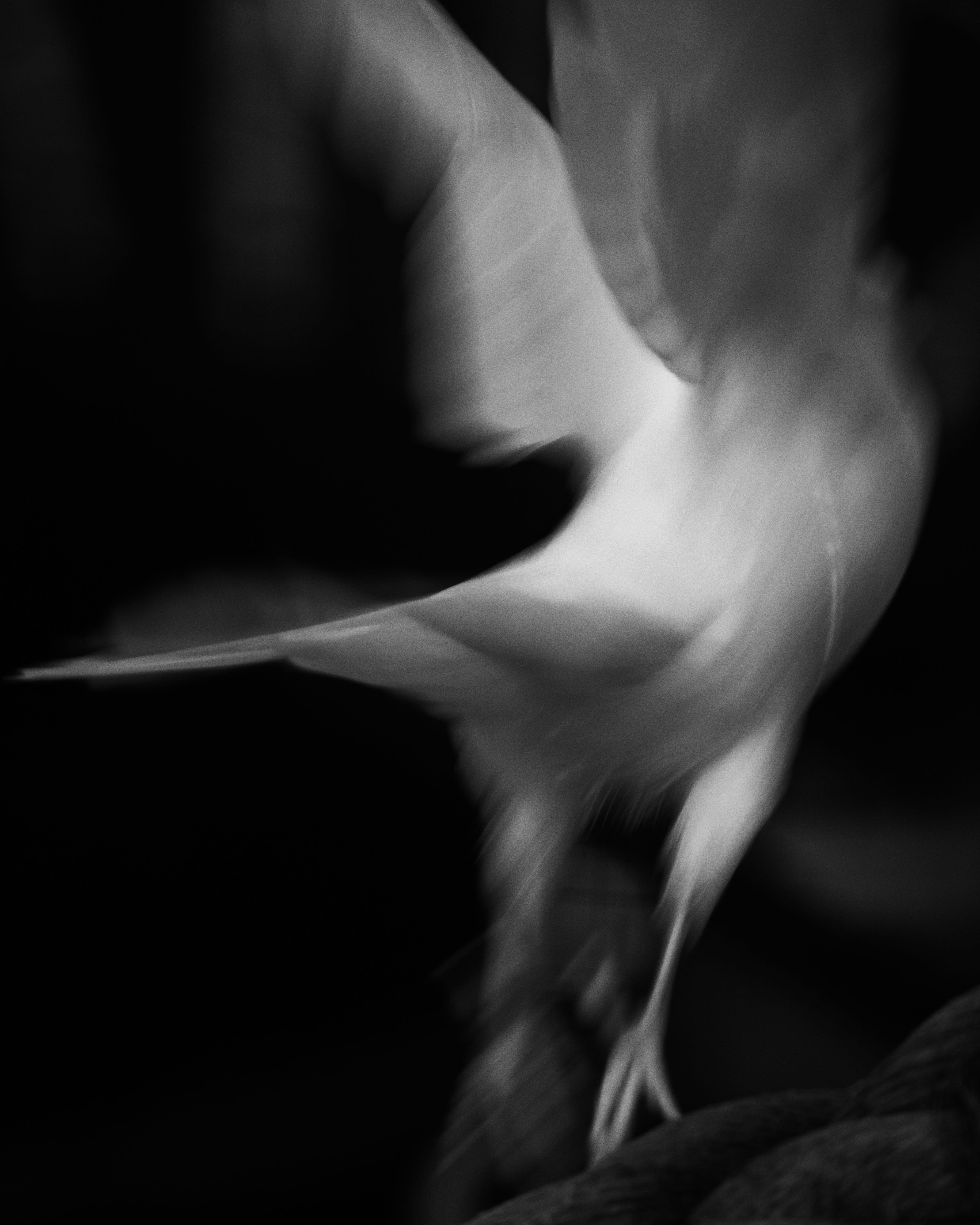
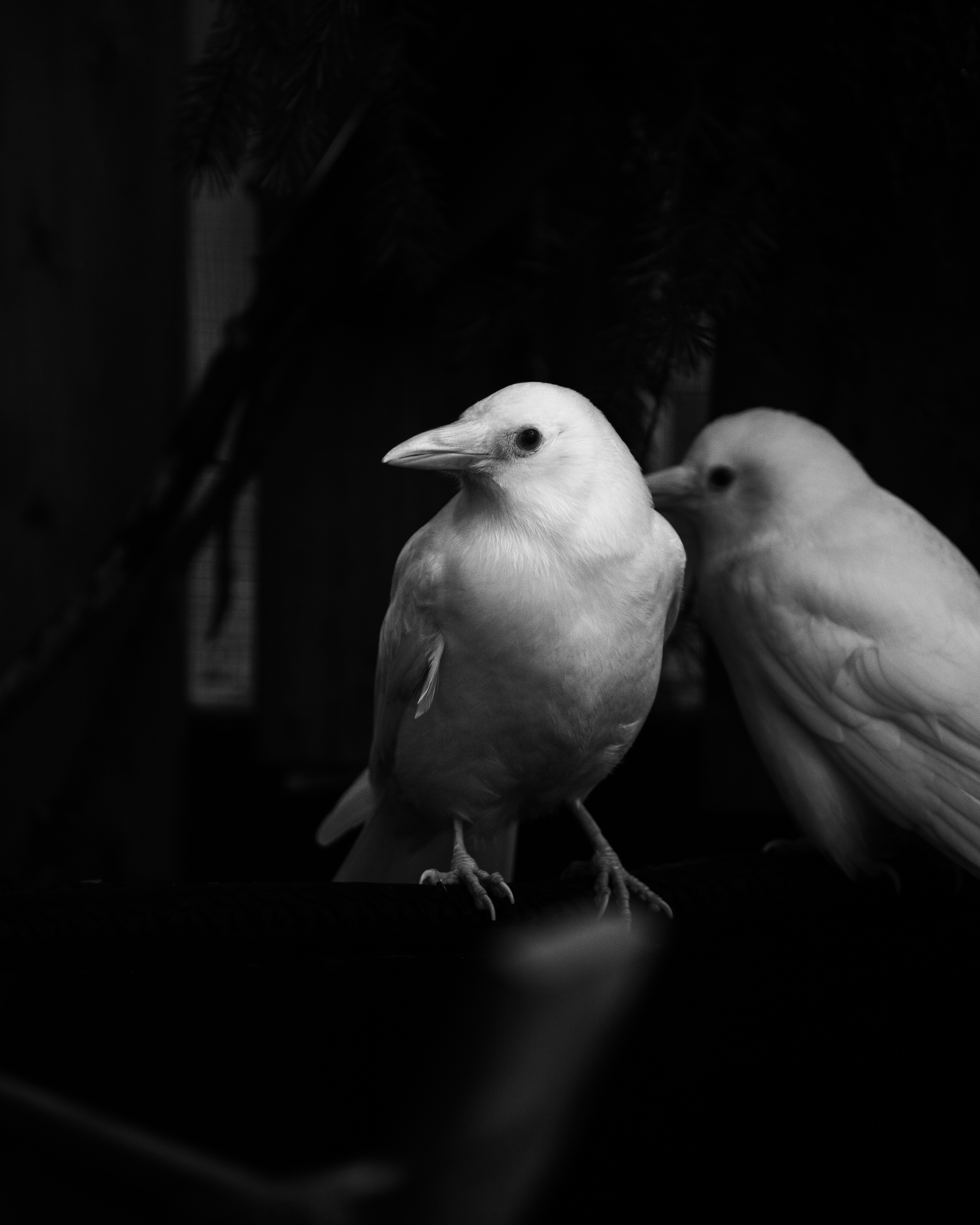
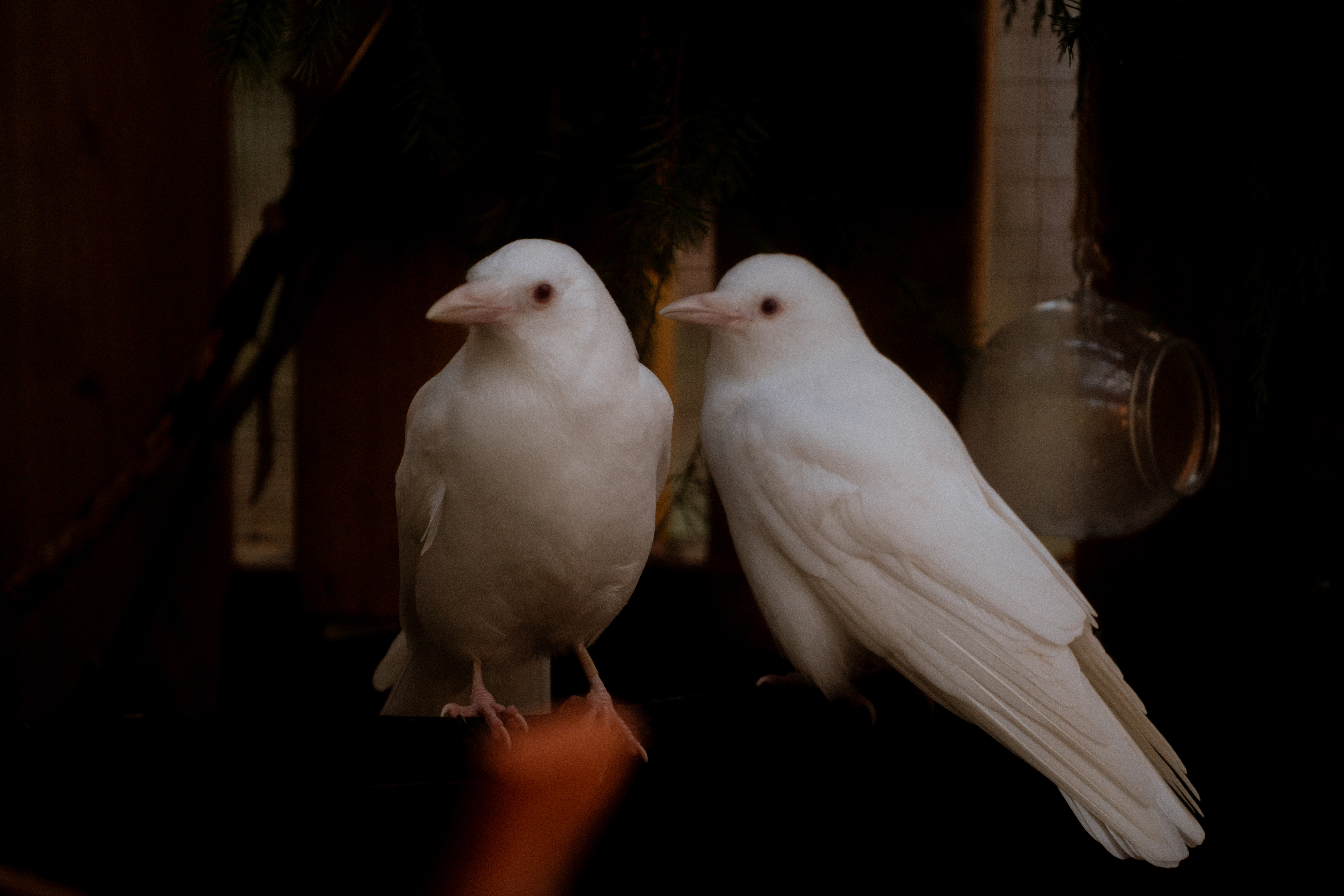
Two albino crows from the MARS Wildlife rescue centre in Comox Valley. I still think about them—they became characters in a short story I am writing. Another example of living life and letting the idea come to you.
“Their names reflect their origin: these crows were born in the traditional territory of the ‘Namgis First Nation on northern Vancouver Island, which encompasses the Nimpkish and Kokish watersheds.”
Hey, you made it to the end! I have a secret for you.
We didn’t realize how early the VIP experience was until the day of, when we started coordinating dinner and taxis with friends. When I saw we had to be at the venue at 5:30 pm, I briefly considered crawling back into bed and pretending I’d misread the email.
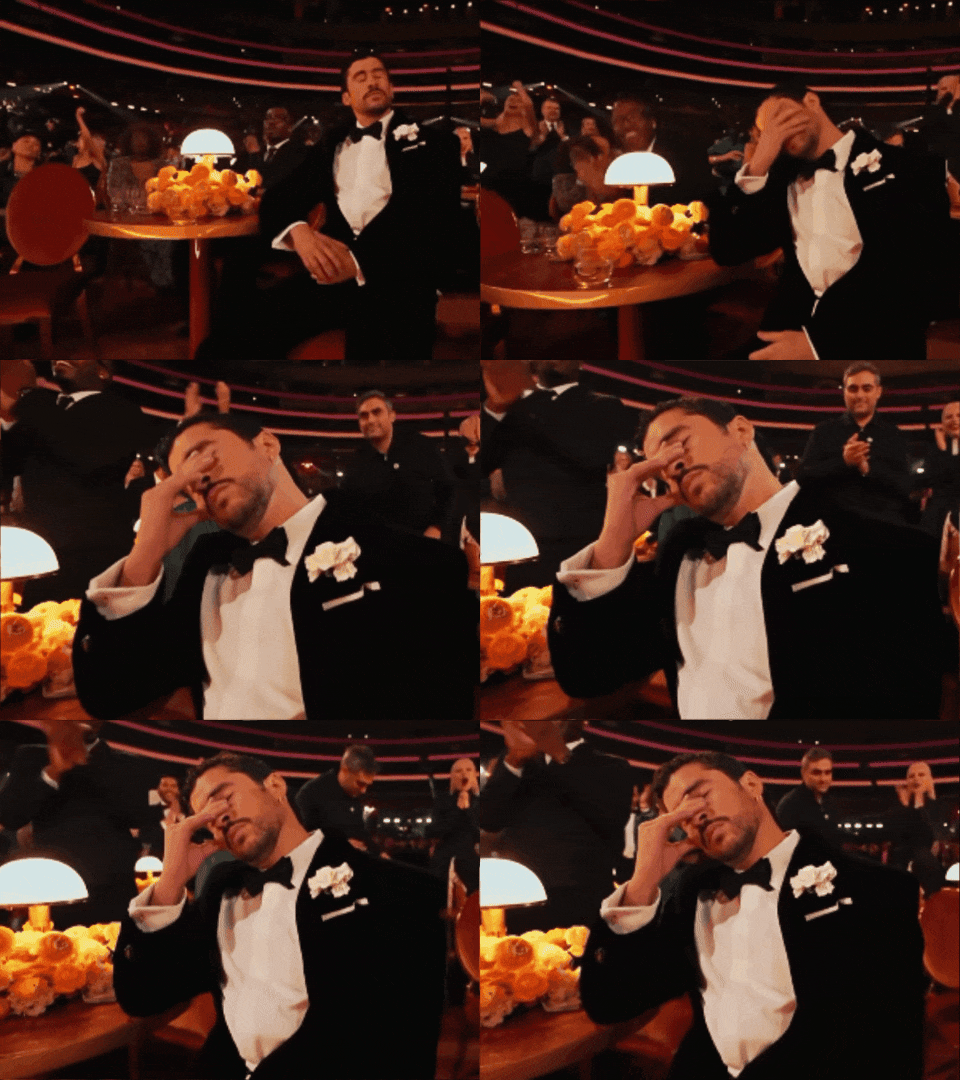
For context: we are morning people. Not the productivity 5 a.m. people—the sit in the dark, sip coffee, don’t-speak-to-me-yet kind. Which means asking me to stay out past 9 p.m. in public is already a stretch. Asking me to do that after standing from 5:30 to 11? Bold.
Fabulous show. Truly. I just need someone—anyone—to start scheduling these things at normal times. Our group included one arthritic knee, one bunk ankle (me), heels, and a collective bedtime that had us checking our watches subtly. It was a ‘school night’ after all. We barely survived, but we did it for art.