

Suspend the ordinary
the day before a journey, a little history, turning off auto-pilot,

Eighteen hours of travel, a ferry from the mainland, and a shuttle bus ride to get here.
My coffee cup bounced out of my pack somewhere on that shuttle and I didn’t notice until we made camp. Gone before the trail even started. I am a planner up to a point. Then at some point you just have to begin.
Tomorrow we set off to start the West Coast Trail.
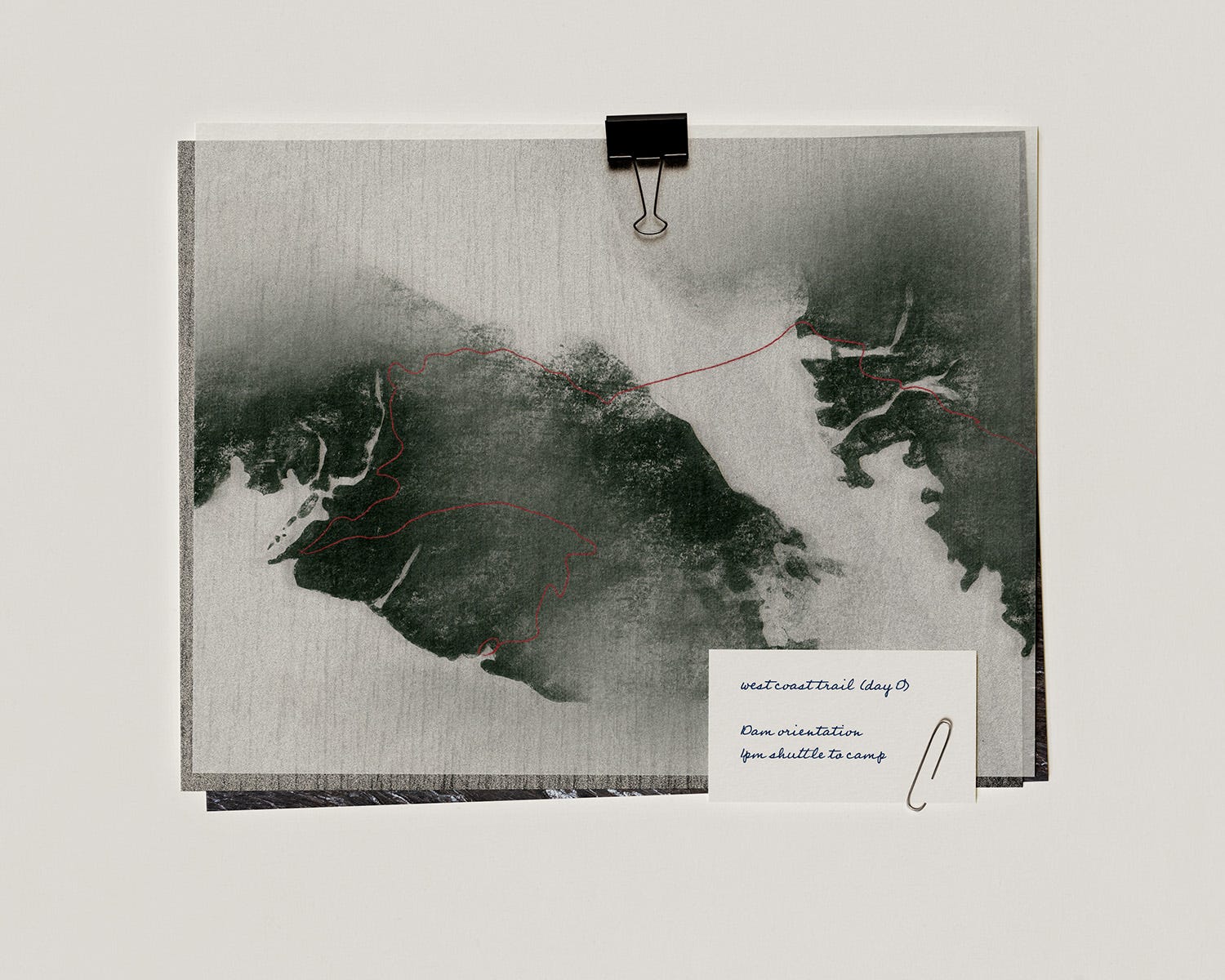
Orientation is mandatory before anyone sets foot on it. We chose to do ours at Pachena Bay, leaving the car parked and waiting for our weary arrival a week later. A Parks Canada ranger walks you through the rules, the tides, the hazards, and then quizzes you on all of it.
Andrea, our ranger, was kind but thorough. Eighty to one hundred people need to be evacuated from the trail every year—slips, falls, mistimed tides. She quizzed us on those tides, circling where we needed to be, and by what time. It was clear she’d watched people underestimate this place.
This is not a formality. The coastline we were about to walk has a long, violent history with the sea, and the trail exists because of it. When the SS Valencia went down in 1906, “leaving 136 dead and only 37 survivors”1.
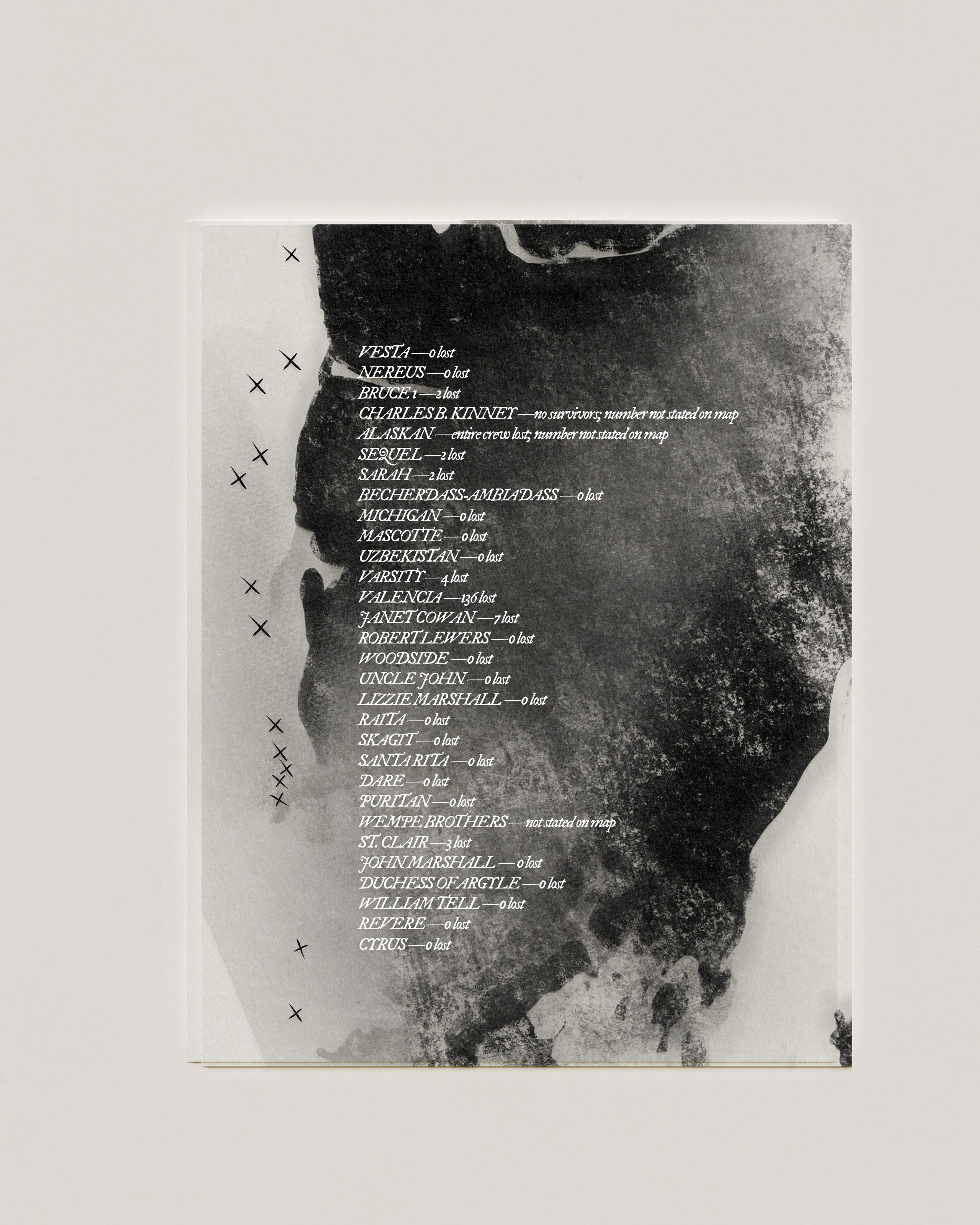
Public outrage moved the government to act. The Dominion Lifesaving Trail was built the following year: six shelter cabins stocked with provisions, strung along the coast so that the next time a ship went down, someone could actually reach the survivors. What is now a bucket-list destination for middle-aged hikers with colour-coded spreadsheets was built, frankly, for emergencies.
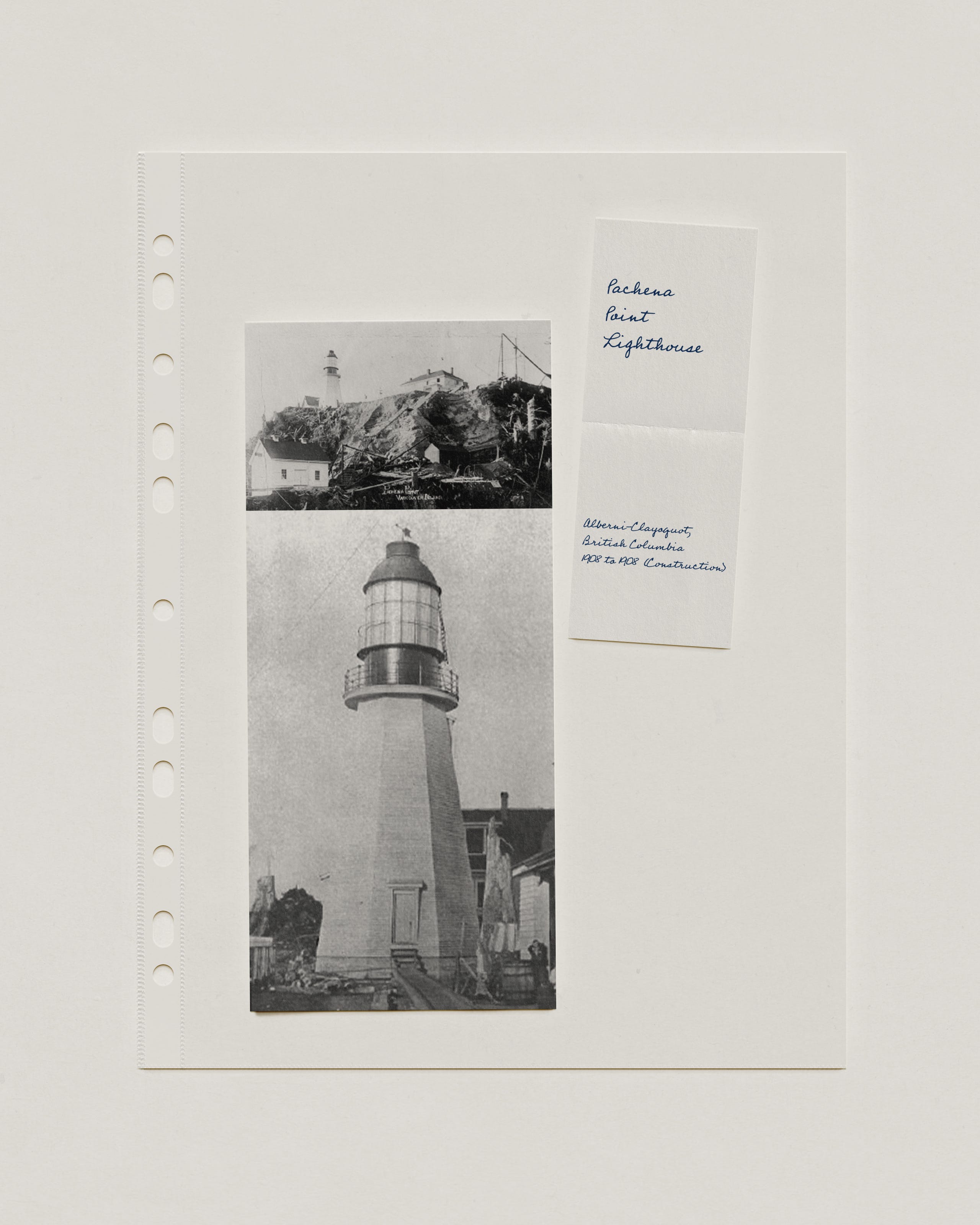
The trail runs through the territories of the Huu-ay-aht, Ditidaht, and Pacheedaht First Nations, whose own trails and paddling routes ran through this coastline for centuries before any of that history. They are the Trail Guardians still, maintaining the path, protecting sacred sites, sharing the stories of this land with whoever passes through. You might find one tending a boardwalk, or sitting by a fire at dusk, or telling you something about where you are that no Parks Canada pamphlet could. We would be walking through their home, under their watch.
Andrea was mid-quiz when a black bear walked into the clearing. She caught me looking up as I said, quietly, “bear.” She glanced back, took her clipboard, and slapped it against the picnic table. Thwap, thwap. The bear moved on. She turned back to us and continued.
I thought: noted.
We took the 1pm shuttle south to Gordon River and made camp for the night, where I discovered my already missing favourite coffee cup. Whatever we had packed, we had. Whatever we hadn’t, or had already lost, we didn’t. The trail was ahead.
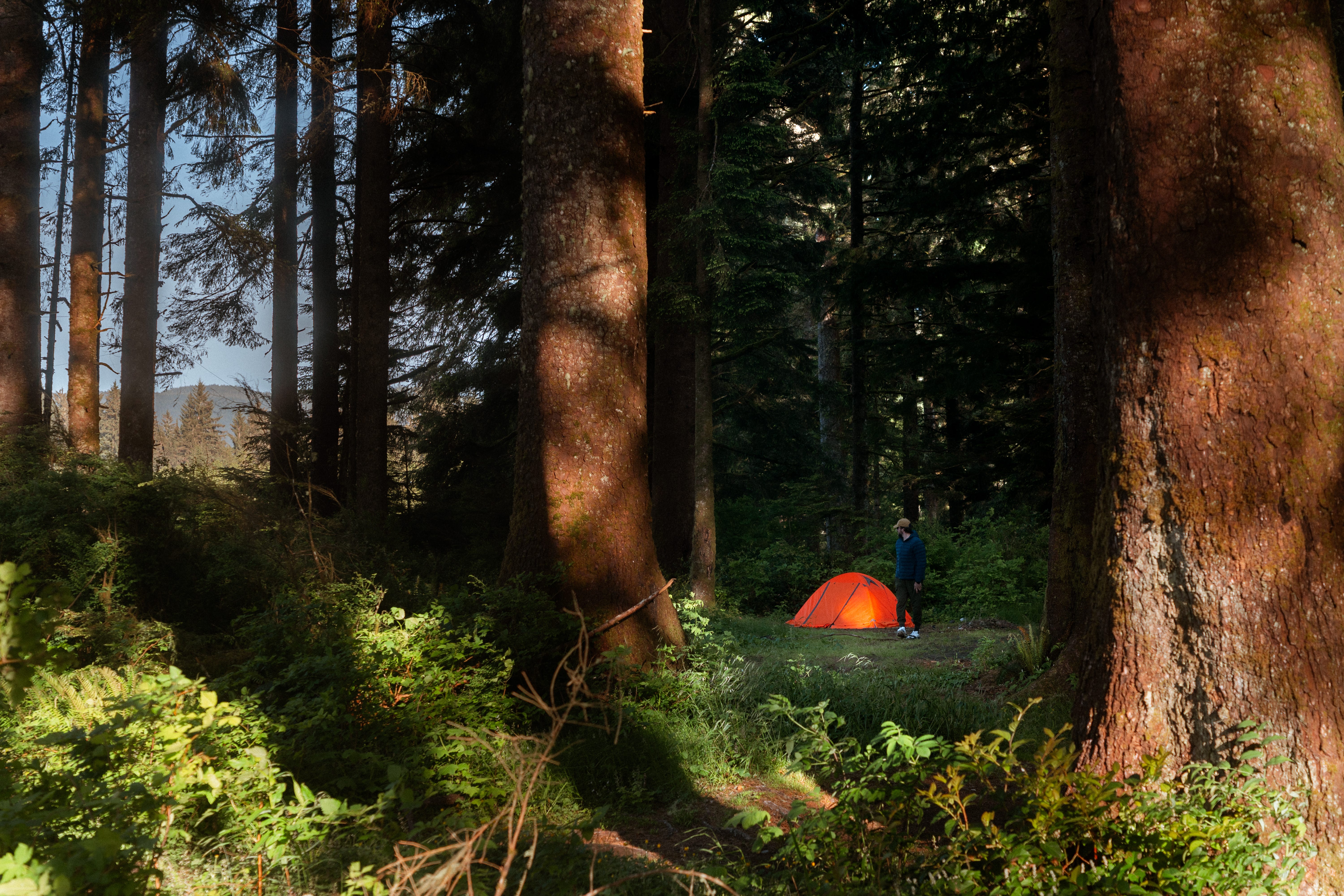
Corey booked this hike in a moment of desperation, mid-exam week, looking up from his laptop and simply declaring it was happening. We’d talked about it for years when we lived on the island, the way you talk about things you assume you’ll eventually do. Then you move away and realize, you didn’t.
I didn’t plan to make this a series. But 75 km with your thoughts gives you the time to be open to whatever the mind decides to throw at you—and I journalled all of it.
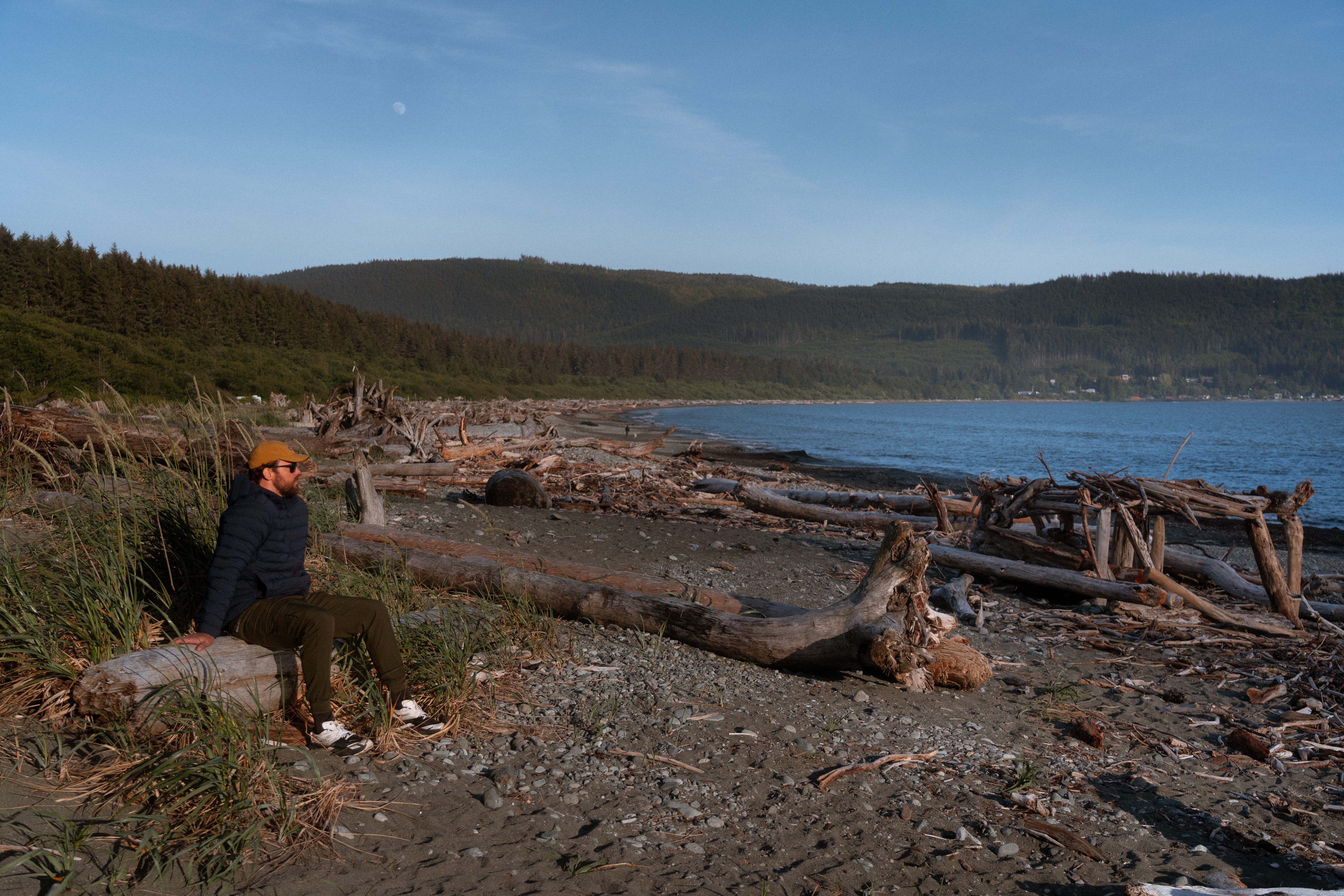
So if you’ll come with me, I’m going back through it. There were highs and lows out there. Terror and awe, sometimes within the same hour. A twisted ankle paired with a full body dive into a dry bush. A bear eating from tidepools at dusk while we sat on the beach and watched, useless and grateful. Evenings reading aloud from the Golden Spruce while the light went flat over the water.
Each day brought its own scribbled musings.
As for where we are in this story, it is the night before we start. A thought turning over in my mind as we settle in: what happens to your thinking when you remove everything familiar? Strip the routine away, force yourself off the smooth worn path of ordinary days. A suspension of the normal.
We say we crave this. We book the vacation, we plan the getaway. And then we bring our habits along anyway. The same old same old, just in a new location.
Days into the hike we passed a family camped on the beach, sitting in a circle, every one of them on a phone. The uncle working the New York Times crossword. With nothing left to do after a long day of hiking, I recognized the reflex. It can be hard to let the familiar drop when the familiar is right there in your pocket.
The grooves deepen without our noticing. Frog-jumping from big moment to big moment. One day you look up and realize you have no memory of the last Tuesday, or the one before that, or the year those Tuesdays belonged to.
A new route home. A shaken routine. Suddenly you cannot coast. You are forced to be present, hands gripping the wheel.
You don’t need seventy-five kilometres out of cell service for it. But you do need to interrupt something, and most of us are remarkably good at not doing that. Even when we say we are getting away from it all, we are prone to let the habits come along. That New York Times puzzle won’t do itself.
I don’t want to wake up years from now and not remember how I got here.
What would you disrupt?
Learn about the three nations and their relationship to the trail
Sinking of the S.S. VALENCIA National Historic Event https://www.pc.gc.ca/apps/DFHD/page_nhs_eng.aspx?id=12000
Hey, you made it to the end! That coffee cup? Every morning, Corey slinks out of bed a little before me to make our pour-over. We have matching to-go mugs: his is green, and mine is terracotta. I didn’t need the cup to survive that trail, but if I was going to bring one, it was going to be my favourite—not only because it’s amazing, but because it’s so versatile.

As soon as I could order it again, I did. So, in a sense, we’re reunited. My little terracotta cup is on my desk as I write.
But I do wonder: did the shuttle driver find its lost twin? I hope they did, and that they got some joy out of my little mistake.
The cup, and where I got it: FELLOW Carter Move Mug
Love this, it felt really calming to read. I look forward to the next episode on this trail. Thanks for taking us along, retrospectively :-)